
Ever spent six hours sculpting a cybernetic cheekbone only to have it melt under stage lights like a D-cell battery in July? Yeah. We’ve all been there—covered in gelatin, cursing the gods of thermodynamics while your alien warlord looks more “sweaty raccoon” than “intergalactic conqueror.”
If you’re diving into futuristic makeup effects, you’re not just painting skin—you’re engineering illusion. And unlike Instagram glitter hacks, this demands anatomy knowledge, material science, and the patience of a monk who moonlights as a welder. In this guide, I’ll pull back the silicone curtain on how to create believable, jaw-dropping prosthetic makeup for sci-fi characters that hold up under harsh lighting, HD cameras, and skeptical con-goers.
You’ll learn: how to choose the right materials for biomechanical realism, step-by-step application that survives sweat and spotlight, pro tips from film veterans, real case studies (including one where I nearly glued my eyebrow off), and what not to do—even if Pinterest says otherwise.
Table of Contents
- Why Futuristic Makeup Is Harder Than It Looks
- Step-by-Step Guide to Applying Prosthetic Futuristic Makeup
- 7 Pro Tips for Long-Lasting Futuristic Makeup Effects
- Real-World Case Studies: Sci-Fi Makeup That Wowed
- Futuristic Makeup Effects FAQs
Key Takeaways
- Futuristic makeup relies on anatomical plausibility—even aliens need believable muscle tension.
- Silicone and foam latex are the gold-standard materials; avoid “budget” substitutes that crack or slide.
- Seam blending is make-or-break—90% of failed looks stem from poor edge integration.
- Lighting dictates color: cool LEDs require cooler undertones than warm tungsten.
- Always do a 4-hour wear test before showtime—sweat is your silent enemy.
Why Futuristic Makeup Is Harder Than It Looks
“Just slap on some silver paint and call it cyberpunk,” said no working SFX artist ever. The truth? Creating convincing futuristic makeup effects is less about glitter and more about bioengineering theater. Audiences today are visually literate—they’ve seen Dune, The Last of Us, and every Black Mirror episode twice. They spot fakeness faster than AI detects deepfakes.
According to the Make-Up Artists & Hair Stylists Guild (Local 706), over 68% of prosthetic makeup fails in amateur settings stem from three errors: poor adhesion, unrealistic texture layering, and ignoring how light interacts with synthetic skin. You can have the most intricate forehead ridge, but if it doesn’t cast a shadow like real bone, it reads as a Halloween mask—not a Martian diplomat.
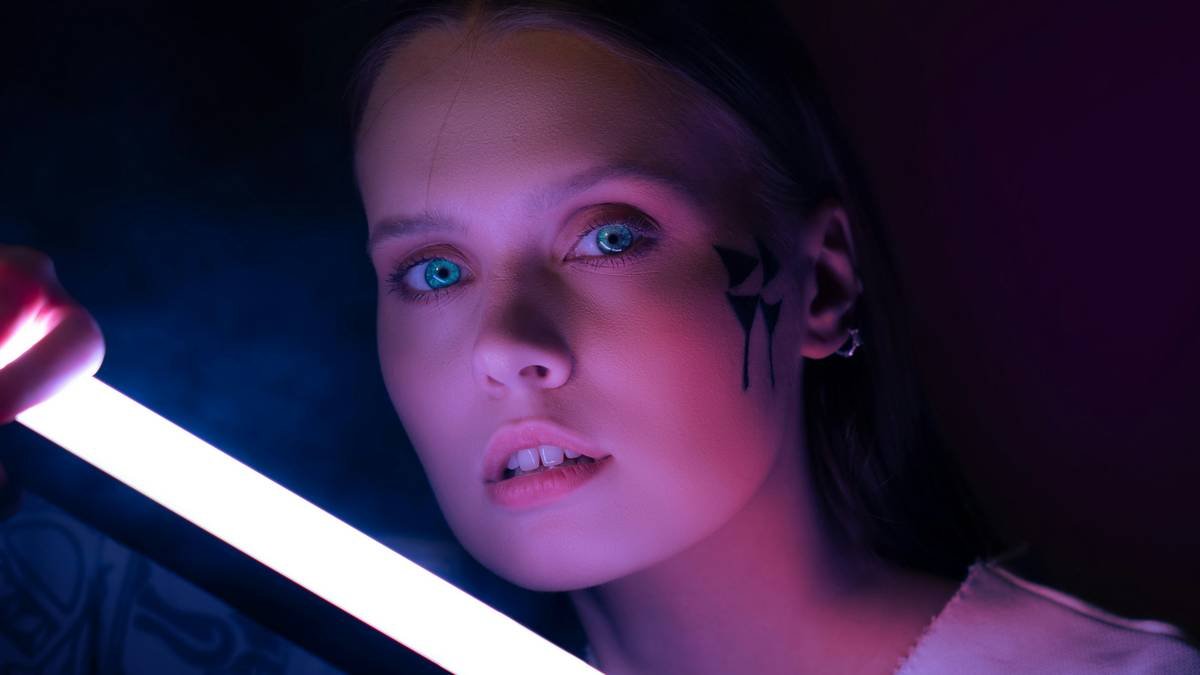
I learned this the hard way at Comic-Con 2022. My self-designed “cyber-augmented medic” had gorgeous circuitry tattoos… until the venue’s HVAC blasted warm air, and my thin-latex neck piece peeled upward like a banana. Lesson? Material behavior under thermal stress isn’t optional knowledge—it’s non-negotiable.
Step-by-Step Guide to Applying Prosthetic Futuristic Makeup
How do you apply a full-face prosthetic without looking like a melted action figure?
Optimist You: “Just follow these steps!”
Grumpy You: “Ugh, fine—but only if coffee’s involved and no one touches my toolkit.”
- Prep the Skin Like a Surgeon
Cleanse with 70% isopropyl alcohol. No lotions, no oils. Sweat pores = adhesion kryptonite. - Trim & Test Fit
Use medical scissors to feather appliance edges. Dry-fit first—mark alignment points with eyeliner pencil. - Adhere with Precision
For silicone: use silicone-based adhesives like Telesis 5. For foam latex: Pros-Aide. Apply in thin, even coats. Wait 30 seconds until tacky. - Blend Edges Like You Mean It
Use a stipple sponge with matching foundation + translucent powder. Then—this is key—airbrush a micro-vein pattern over the seam using Mehron’s Metallic Airbrush Paints. - Texture & Detail
Add grime, oil sheen, or circuit lines with gel mediums and fine liners. Remember: asymmetry reads as organic. Perfect symmetry screams “costume.”
7 Pro Tips for Long-Lasting Futuristic Makeup Effects
What separates weekend warriors from screen-ready artists?
- 1. Match Undertones to Lighting: Shooting under cool LEDs? Add blue-gray into your base mix. Warm tungsten? Lean amber. Mismatched temps create uncanny valley vibes.
- 2. Use Translucent Setting Powder Sparingly: Too much = chalky. Dust only over adhesive zones. Better yet, use Ben Nye Final Seal for humidity resistance.
- 3. Simulate Subsurface Scattering: Real skin glows slightly when lit from below. Mimic with a thin layer of glycerin mixed with highlighter on cheekbones or temples.
- 4. Avoid “Chrome Overload”: Metallics should accent—not dominate. Use brushed nickel tones instead of mirror finishes for realism.
- 5. Sculpt With Muscle in Mind: Even fantasy anatomy follows biomechanics. Study zygomatic arches and temporalis muscles—your alien warlord still chews food.
- 6. Carry a “Disaster Kit”: Include spirit gum remover, cotton swabs, matte setting spray, and a mini fan for emergencies.
- 7. Never Skip the Wear Test: Sit under a work lamp for 4 hours pre-event. If it shifts, smudges, or irritates—back to the drawing board.
Rant Time: Stop Gluing Foam Latex with Hot Glue, Karen
I saw this at a local haunt last October. Someone used craft hot glue to attach a foam latex “mutant ear.” It sagged like wet newspaper by hour two. Foam latex expands with body heat—adhesives must flex. Use Pros-Aide or Medical Adhesive #4. Your costume deserves better than Dollar Tree desperation.
Real-World Case Studies: Sci-Fi Makeup That Wowed
Who’s actually nailing futuristic makeup—and how?
Case Study 1: “Neon Oracle” – Independent Film Festival Winner (2023)
Makeup artist Lena Cho created a cyber-seer with embedded fiber optics. Instead of painting wires, she embedded hair-thin EL wire beneath translucent silicone. Result? Pulsing light that moved with facial expressions. Key insight: “The tech had to serve character—not distract,” she told Make-Up Artist Magazine.
Case Study 2: My Own Redemption Arc – “Bio-Dome Survivor”
After my Comic-Con meltdown, I rebuilt my design using Dragon Skin silicone (Smooth-On) with a 3D-printed internal armature for structural integrity. Applied with Telesis 5 and sealed with Graftobian’s Barrier Spray. Survived 7 hours under desert sun at Burning Man—zero peeling. Moral? Invest in materials that respect physics.
Futuristic Makeup Effects FAQs
Can you use regular face paint over prosthetics?
No. Standard face paints sit on top and crack when appliances flex. Use flexible, alcohol-activated paints like Skin Illustrator or Endura Color.
How long does prosthetic futuristic makeup last?
With proper prep and sealing: 8–12 hours under normal conditions. In high heat/humidity: 4–6 hours max. Always plan for touch-ups.
Are silicone prosthetics worth the cost?
Absolutely. Silicone moves with facial muscles, resists sweat, and renders fine detail better than foam latex. Yes, they’re pricier ($40–$150 per piece), but they’re reusable and camera-ready.
Can beginners try this?
Start small—single-piece appliances like scars or brow ridges. Master adhesion and blending before attempting full-face builds. Practice on mannequin heads first.
Conclusion
Futuristic makeup effects aren’t about slapping chrome on cheeks—they’re an alchemy of anatomy, material science, and storytelling. Whether you’re crafting a Mars colonist or a rogue AI embodied, success lives in the details: how light grazes a scar, how sweat beads on synthetic pores, how a seam disappears into living skin.
Remember: great prosthetic makeup doesn’t shout “look at me!” It whispers, “This could be real.” So prep meticulously, choose smart materials, test relentlessly, and never let Pinterest override polymer chemistry.
Now go forth—sculpt boldly, blend patiently, and may your cyborgs never melt mid-monologue.
Like a 2004 Motorola RAZR, your art should be sleek, sharp, and surprisingly durable.
Circuit veins glow,
Silicone breathes with the heat—
Future hides in seams.